19 Jul 2026
How Customer Support Insights Prompt Privacy Policy Evolutions in Mobile Payment Feature Releases

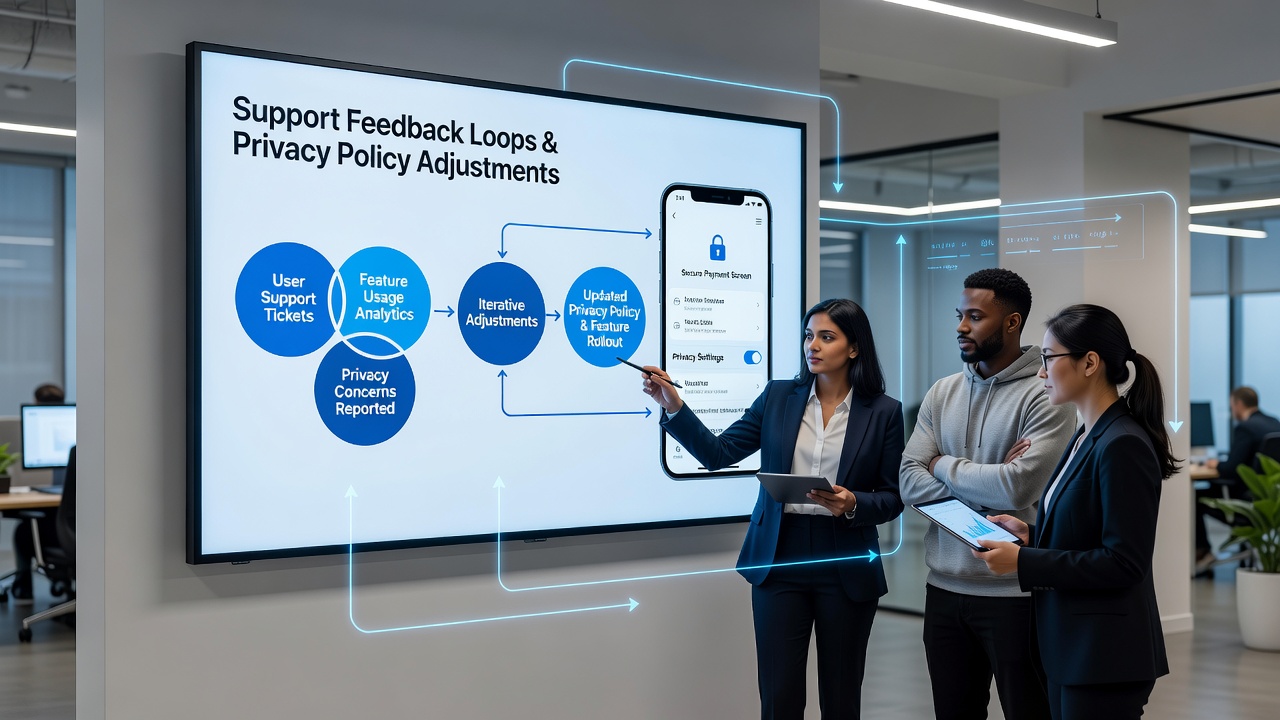
Support channels in mobile payment platforms collect vast amounts of user inquiries and complaints that directly feed into privacy policy revisions when companies prepare new feature deployments, and observers note these loops operate through systematic ticket analysis combined with regulatory compliance checks. Teams categorize incoming data around issues like data sharing during transaction verification or consent management in account linking processes, then route aggregated findings to policy teams who adjust settings before launch dates arrive.
Mechanics of Feedback Integration
Data from support interactions reaches developers through weekly review sessions where patterns emerge around user concerns with biometric authentication storage or third-party access during cross-border transfers, and companies respond by tightening default privacy configurations in subsequent updates. This process involves mapping specific complaint types to technical controls, such as limiting location data retention when users report unexpected tracking during payment method additions.
Research indicates that platforms operating in multiple regions synchronize these adjustments with local requirements, for instance aligning European operations with guidelines from the European Data Protection Board while Canadian teams reference frameworks from the Office of the Privacy Commissioner of Canada. The result appears in staged rollouts where privacy toggles become more granular after feedback volumes spike around certain features.
Examples from Recent Deployments
One rollout of enhanced peer-to-peer transfer capabilities in early 2025 incorporated changes after support logs showed repeated questions about contact list scanning permissions, prompting developers to introduce explicit opt-in screens and shortened data retention periods. Similar patterns surfaced during the introduction of recurring payment scheduling tools, where users flagged potential exposure of spending habit details through shared logs, leading to isolated processing environments for those records.
By July 2026, several major providers plan to activate AI-assisted fraud detection modules that rely on transaction pattern analysis, and preliminary support data from beta tests already drives modifications to anonymization techniques applied before model training occurs. These modifications include expanded user dashboards for reviewing inferred risk scores, a direct response to queries collected through in-app help centers.
Regulatory and Industry Context
Regulatory bodies monitor these feedback-driven adjustments through periodic audits that examine how companies translate user input into documented policy shifts, and reports from Singapore's Personal Data Protection Commission highlight cases where support metrics accelerated consent mechanism overhauls ahead of new service launches. Industry associations compile anonymized benchmarks across providers to identify common adjustment triggers, such as spikes in inquiries following feature announcements.
Figures from academic analyses of payment platform logs reveal correlations between support volume on privacy topics and subsequent policy document revisions, with updates often addressing data minimization principles during authentication flows. Providers maintain internal dashboards that track resolution rates for these issues, feeding the same data streams back into pre-rollout testing protocols.
Long-Term Effects on Platform Architecture
Over multiple cycles, accumulated support insights shape architectural decisions like modular consent layers that allow regional variations without core code changes, and companies document these evolutions in transparency reports released alongside major updates. The approach reduces repeat inquiries by addressing root causes in policy language rather than surface-level responses alone.
Patterns show that platforms incorporating structured feedback analysis experience fewer post-launch adjustments, as initial deployments already reflect refined privacy parameters derived from prior support exchanges. This creates a continuous refinement cycle where each feature release builds upon documented lessons from earlier interactions.
Conclusion
Support feedback loops serve as structured pathways that translate user experiences into measurable privacy policy modifications during mobile payment feature introductions, with data flows connecting ticket categorization, regulatory alignment, and technical implementation across global operations. Continued documentation of these processes provides clearer visibility into how platforms evolve their data handling practices in response to real-world usage signals.